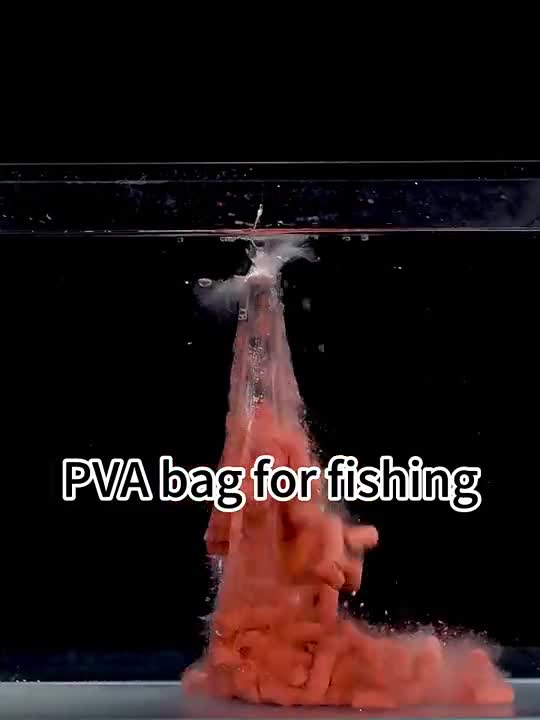
Biodegradable and water-soluble are not two names for the same thing, and choosing the wrong one is common. The question to answer first is simple: does the pack need to disappear in water, or break down in a compost environment?
Two different end-of-life routes
Water-soluble PVA film dissolves. Put it in water and the film is gone — that is what makes a detergent pod, a fishing bag or a hospital laundry bag work. The pack completes its job by vanishing in the wash or in the water it was thrown into.
Biodegradable and compostable film does not dissolve. It breaks down under composting conditions, over time, through biological action. It stays a solid object until then. That is the right behaviour for a dry product that is disposed of as waste.
Where biodegradable packaging fits
- Dry goods and ambient products — where the pack is handled dry and ends up in a waste or compost stream.
- Retail brands with a sustainability commitment — where the end-of-life story is part of the product message.
- Food and non-food dry products — subject to the barrier and shelf-life requirements of the specific product.
- Markets with compostable packaging requirements — where the waste route is defined by regulation or by the customer.
What we supply
| Specification | What we supply |
|---|
| Material route | Water-soluble PVA film, or biodegradable and compostable film for dry applications |
| Format | Bags and pouches, or film in rolls, made to your dimensions |
| Thickness | Set against the load and the barrier the product needs |
| Print | Plain, or printed with branding and disposal information |
| Product suitability | Assessed against your product — moisture, oil and shelf-life requirements |
| Target market | Material route chosen with the disposal rules of your market in mind |
What to specify when you enquire
Start with what happens to the pack after use
- What goes in the pack, and whether the product is dry, moist or oily
- How the pack is disposed of — water, compost, or general waste
- Where the product is sold, and what disposal rules apply there
- Shelf life and barrier requirement
- Bag size, thickness and format
- Print requirement and target quantity
How to choose between the two routes
The decision comes down to one question. Does the pack have to dissolve in water as part of how the product works? If yes — detergent pods, single-dose liquids, fishing bags, dye sachets, agrochemical packs, embroidery backing, laundry bags — then water-soluble PVA is the material, and no biodegradable film will do the job.
If the pack is handled dry, stays a solid object through its life and is disposed of as waste, then biodegradable or compostable film is the appropriate route. Barrier, shelf life and cost differ from PVA, and they have to be assessed against the actual product rather than assumed.
Where a customer needs both, we supply both, and we will tell you plainly which one fits your product rather than selling you the one we would rather make.
Common mistakes
- Assuming biodegradable means it dissolves. It does not. It composts — slowly, as a solid.
- Using PVA where the pack will never see enough water. A dissolving pack that is thrown in a bin does not dissolve.
- Choosing on the label rather than the disposal route. What matters is what actually happens to the pack in the customer's market.
- Ignoring shelf life. Compostable materials have different barrier and ageing behaviour from conventional laminates.
How ordering works
Tell us what you pack and how the pack is disposed of. We reply within one business day with a material recommendation and a sample plan. You test the samples on your own product. Bulk production starts only when the pack performs as agreed.
Related reading
For the full comparison of the two routes, read PVA film vs biodegradable film: which one fits. For how dissolving grades are matched to water temperature, see PVA film grades: cold, warm or hot water?
Quick answers
The questions buyers ask most about this application.
Is biodegradable film the same as water-soluble film?
No, and this is the most common misunderstanding. Water-soluble PVA film dissolves in water. Biodegradable film does not dissolve — it breaks down under composting conditions over time, remaining a solid object until it does.
When should I choose PVA instead of biodegradable?
When the pack has to dissolve in water as part of how the product works — detergent pods, single-dose liquids, fishing bags, dye sachets, agrochemical packs, embroidery backing and laundry bags. No biodegradable film can do that job.
When is biodegradable packaging the right choice?
When the pack is handled dry, stays solid through its life, and is disposed of as waste or compost. Barrier behaviour, shelf life and cost are assessed against the specific product rather than assumed.
Do you supply both materials?
Yes. We supply water-soluble PVA film and biodegradable or compostable film, and we will tell you which route fits your product rather than steering you to one.
What information do you need to recommend a material?
What you pack — dry, moist or oily — plus how the pack is disposed of and where it is sold. Those three answers usually settle the material route before anything else is discussed.
 Sainsun PVA