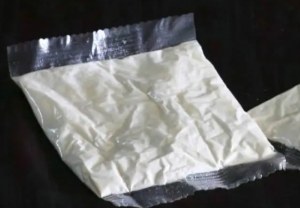
Embroidery film is a temporary structure. It has to be stiff enough to hold hundreds of stitches in place, survive the run without tearing, and then vanish completely in the rinse — leaving no stiffness, no haze and no residue on the finished piece.
What embroidery film does
Water-soluble embroidery film is a PVA backing or topping film used as a temporary stabiliser for machine embroidery, lace work, cutwork and appliqué. It gives the needle something to stitch into where the fabric alone is too open, too stretchy or too delicate to support the design.
When the run is finished, the piece is rinsed in hot water. The film dissolves and disappears, leaving the embroidery and nothing else.
Where it is used
- Lace and cutwork — the film is the structure the stitches are built on, and it is gone once the piece is rinsed.
- Delicate and open-weave fabrics — where the fabric cannot support dense stitching on its own.
- Topping film — laid over pile fabrics such as terry and fleece so the stitches do not sink into the nap.
- Appliqué and free-standing designs — as a backing that holds the shape through the run.
What we make
| Specification | What we supply |
|---|
| Film grade | Hot-water PVA, 70 °C and above — dissolving fully in a hot rinse |
| Format | Sheet, roll or cut-to-size packs |
| Thickness | Set against the density of the design and the fabric |
| Stiffness | Selected so the film holds the stitches without distorting the fabric |
| Pack size | Made to the sheet or roll dimensions your machines use |
| Print | Plain film, or printed with branding |
What to specify when you enquire
Embroidery film is specified against the design and the fabric
- The fabric or material the design is stitched on
- Stitch density and the complexity of the design
- Whether it is a backing film, a topping film, or both
- Rinse temperature and how the finished piece is washed out
- Sheet, roll or cut pack — and the dimensions your machines take
- Target quantity
Why stiffness and rinse temperature both matter
Two failures define a bad embroidery film. If the film is too soft, the design distorts, the fabric puckers and the stitches sink in, particularly on dense designs. If the film is too stiff, it fights the needle, the fabric marks and the finish is harsh.
The rinse side is the other half. Film that does not dissolve fully in the rinse leaves a stiff hand feel and a visible haze on the finished piece — the one defect a customer can feel as soon as they pick it up. Hot-water film rated for 70 °C and above is what dissolves cleanly in a hot rinse, and the thickness is set so the film has enough body for the design.
Common mistakes
- Rinsing in water that is too cool. A hot-water film needs a hot rinse. Under-tempered water leaves residue that cant be washed out afterwards.
- Using one film for every fabric. A film that stabilises terry topping is not the film for fine lace.
- Choosing by price per sheet. Film that tears mid-run costs far more in rework than the difference in price.
- Skipping the rinse test. Dissolving has to be proved on the finished piece, at the rinse temperature the workshop actually uses.
How ordering works
Send the fabric, the design and your rinse conditions. We reply within one business day with a film recommendation and a sample plan. You run the samples on your own machines. Bulk production starts only when the film performs as agreed.
Related reading
For how film grades are matched to water temperature, read PVA film grades: cold, warm or hot water?. For the wider chemistry difference between dissolving film and biodegradable film, see PVA film vs biodegradable film: which one fits.
Quick answers
The questions buyers ask most about this application.
What film grade is used for embroidery backing?
Hot-water PVA film, rated 70 °C and above. It has to survive the embroidery run with enough stiffness to hold the stitches, then dissolve completely in a hot rinse without leaving residue or a stiff hand feel.
Backing or topping film — can you supply both?
Yes. Film is supplied for backing, for topping over pile fabrics such as terry and fleece, or for both. Tell us which the design needs.
How do I know the film will rinse out completely?
It is proved during sampling, on your finished piece, at the rinse temperature your workshop uses. Full dissolving in a hot rinse is the requirement we tune the film against.
What thickness should I use?
Thickness is set against the stitch density and the fabric. Dense designs on delicate fabric need more body; light designs on stable fabric need less. Send the design details and we will recommend a starting point for sampling.
What quantity do I need to order?
It depends on the sheet or roll size and the film thickness. Send your target quantity with the enquiry and we confirm the exact minimum, unit price and lead time in the written quote.
 Sainsun PVA