 Sainsun PVA
Water-soluble packaging, explained
Written by the people who make the film. No fluff — what to specify, what to test and where projects usually go wrong.
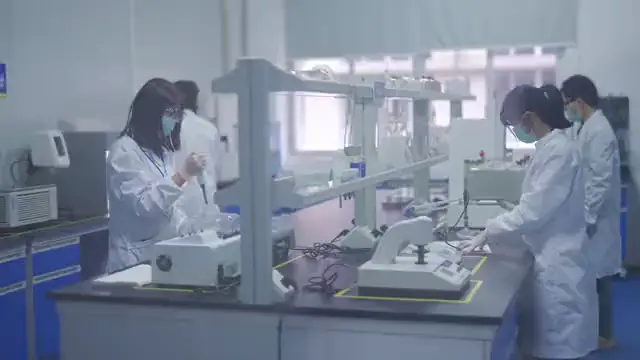
Does PVA Film Leave Microplastics When It Dissolves?
Dissolved PVA is polymer in solution, not a solid particle - so a fully dissolved film leaves no microplastic fragments. What dissolves, what biodegrades, and how to test residue on your own process.
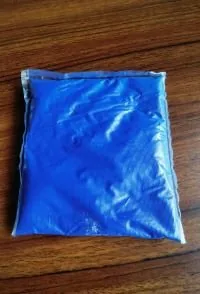
PVA Film or Water-Soluble Paper: Which One Dissolves?
Paper disperses fast and leaves fibre; PVA dissolves completely, with the temperature set by grade. Which material suits which pack, and what to specify before a 1,000 pc order.
Can You Heat Seal Water-Soluble PVA Film?
Yes — the seal window is set per order against your machine’s temperature and dwell, and it trades off against thickness and dissolving temperature. What to send, and how free samples confirm the seal before a 1,000 pc order.
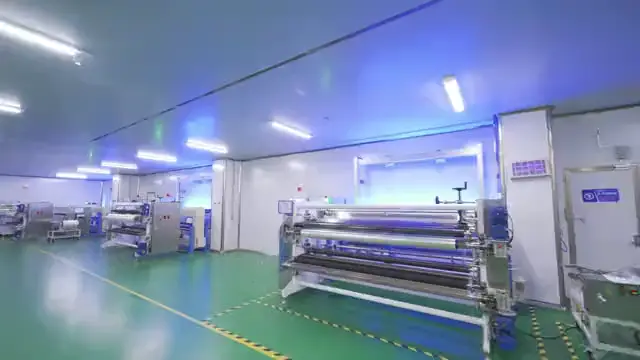
How Is Water-Soluble PVA Film Made?
Three dissolving grades produced as master rolls at about 40 tons per month, thickness set between 30 and 100 microns per application, and every roll slit to your line width.
Is PVA Film Compatible With Your Product?
What makes a product a poor fit for water-soluble film, which grade follows the water rather than the goods, and how to run a trial that predicts storage — not just the first wash.
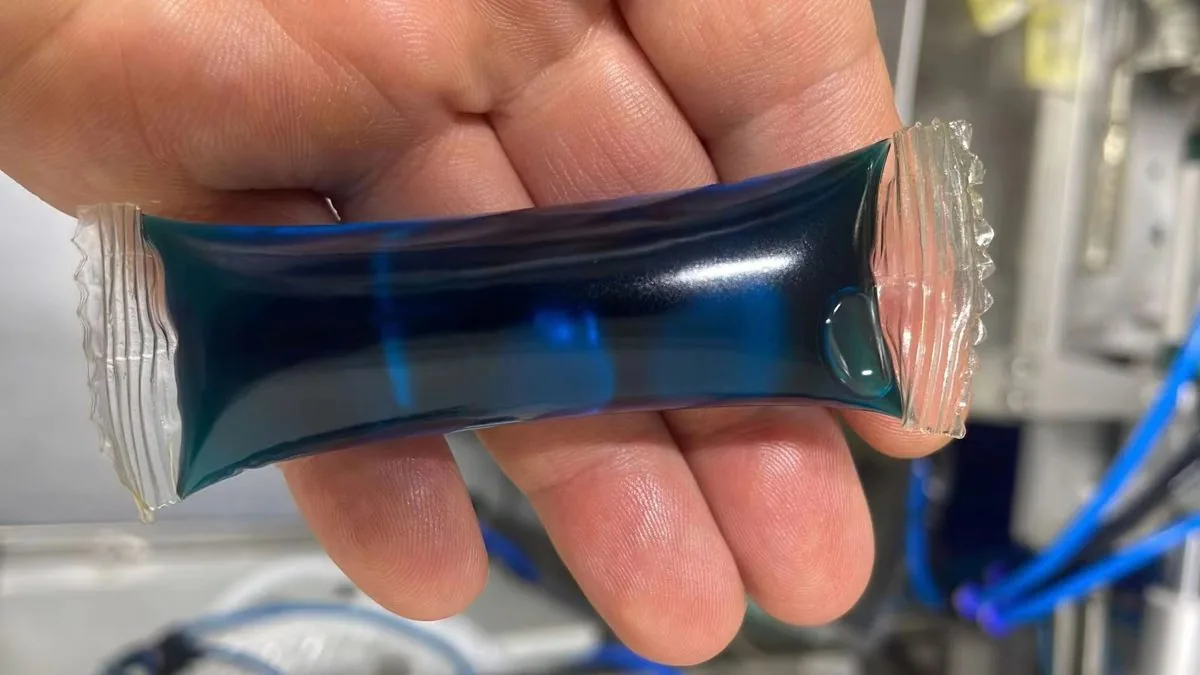
Do You Fill Water-Soluble Packs Yourself, or Use OEM Filling?
No filling machines? We make the PVA pouches, fill and seal your materials, and deliver ready-to-use packs — the four steps, who supplies what, and why compatibility is tested first.
Can You Pack Dye Powder in a Water-Soluble Bag?
A weighed dose of dye sealed in PVA film goes into the bath whole — how the grade is matched to bath temperature, why residue is the failure to test for, and what to send for a quote.
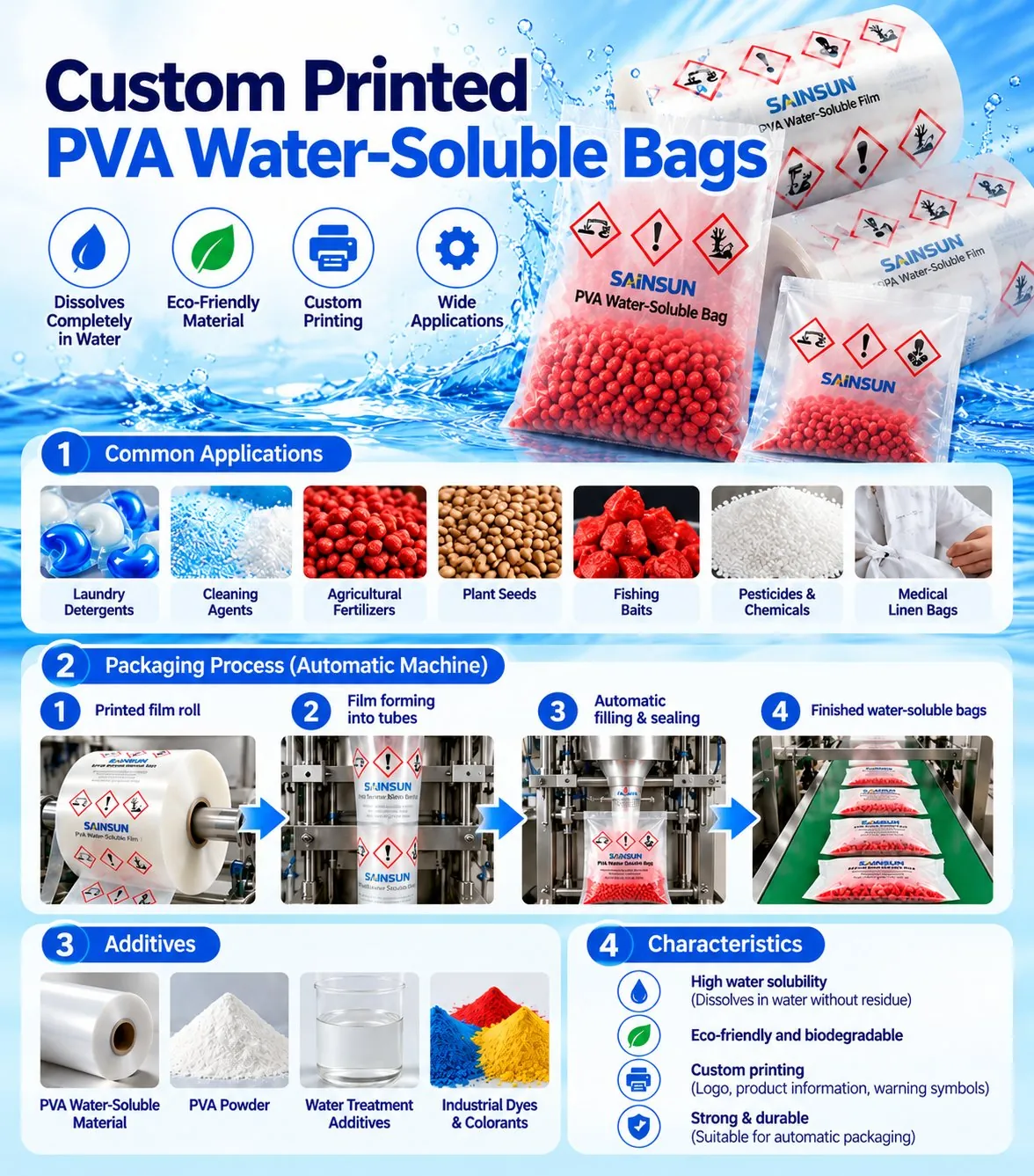
Can You Print on Water-Soluble PVA Film?
Yes — every order is made to the customer’s own print, including hazard pictograms. What can be printed, how ink and dissolve behaviour are tested together, and how printed samples work before a 1,000 pc order.
How Thick Should PVA Film Be?
PVA film runs from 30 to 100 microns — what pushes a pack to the thick end, when thinner is safe, how gauge and dissolve time interact, and how to confirm the number on free samples.
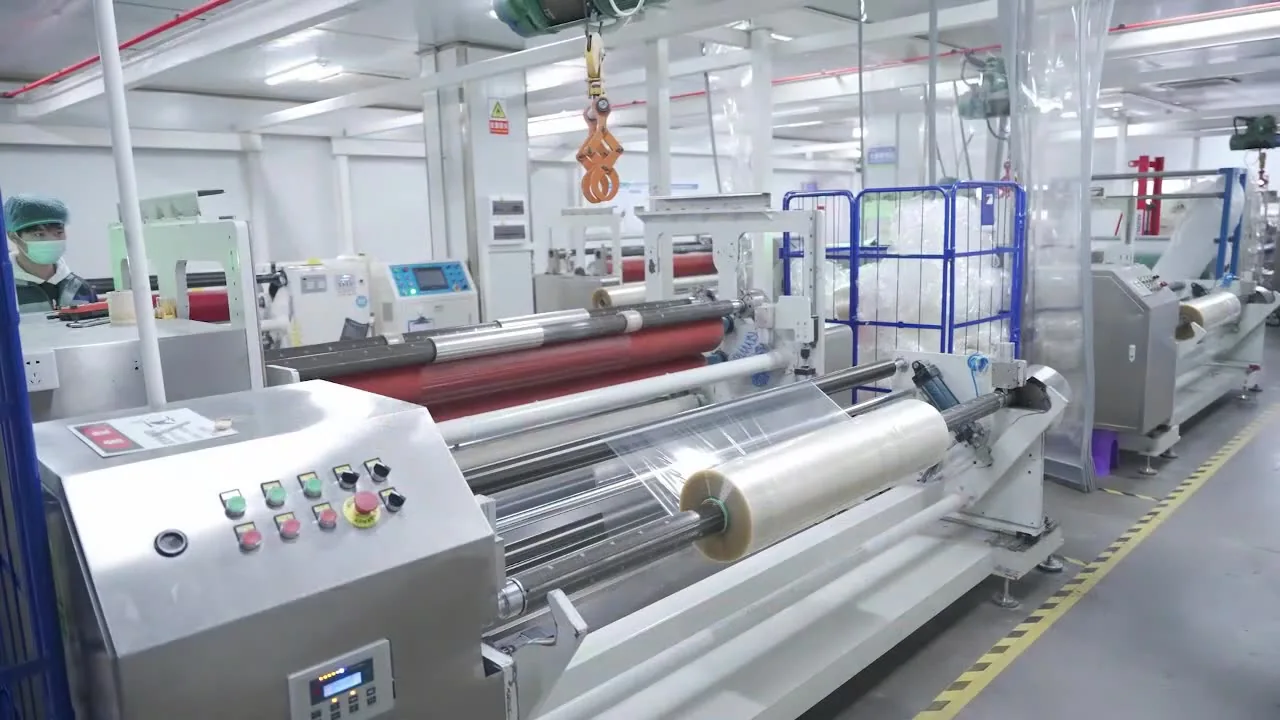
PVA Film in Rolls or Finished Bags: Which Should You Buy?
One decision settles it: who owns the filling step. The five numbers a roll specification needs, the failures that only hit rollstock, and how to validate either route before a volume order.
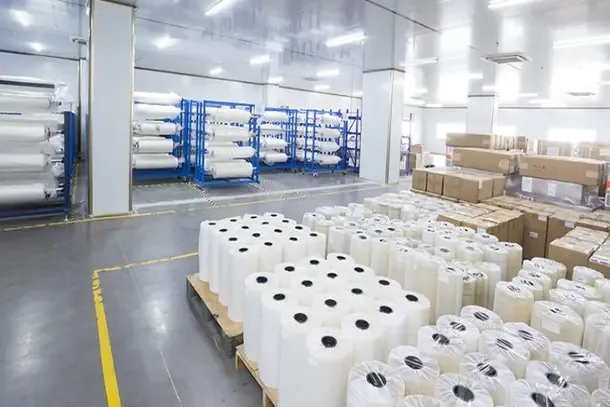
PVA film grades: cold, warm or hot water?
How to choose a water-soluble PVA film grade. What cold (20-30C), warm (40-60C) and hot (70C+) films are for, what changes dissolving time, and what to test before ordering.
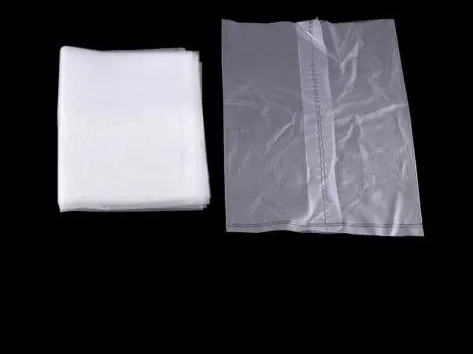
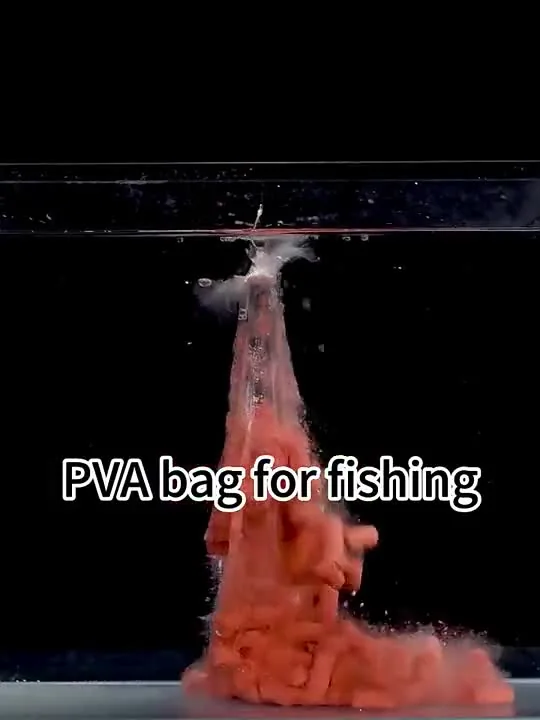
PVA bags for fishing: what to specify
How water-soluble PVA bags are used in fishing, which film grade to choose for fresh or salt water, what sizes and thicknesses to specify, and the mistakes that ruin a batch.
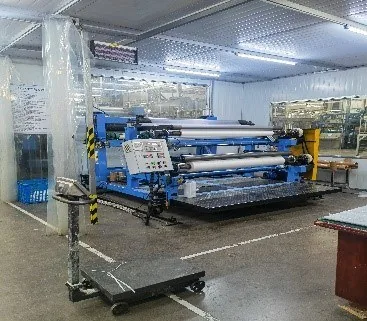
PVA film vs biodegradable film: which do you need?
Water-soluble PVA film and biodegradable film solve different problems. A side-by-side comparison of how each behaves, the disposal route each assumes, and how to choose.
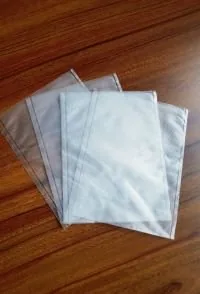
Water-soluble packs for agrochemicals
Why agrochemical formulators pack doses in water-soluble PVA film, which fills are hardest on the film, what to specify for hazard printing, and how sampling works.
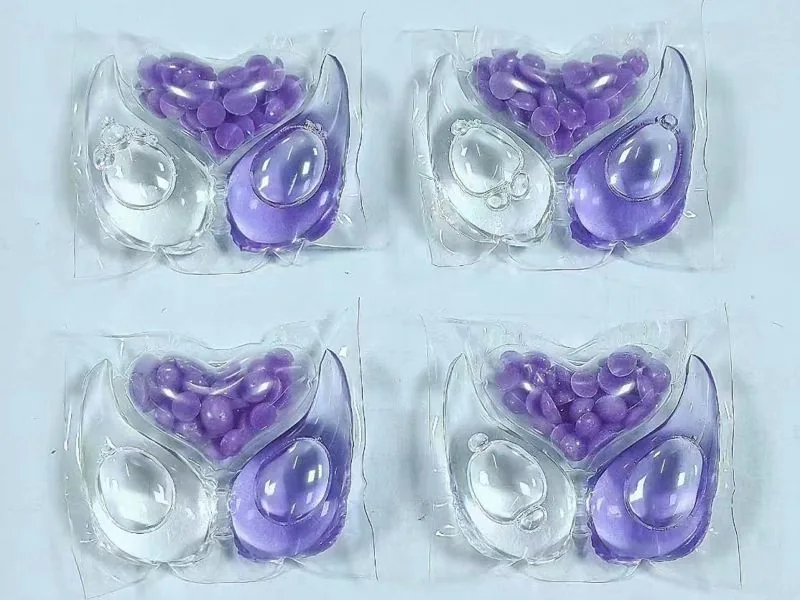
Detergent pod film: what brand owners check first
What water-soluble film has to do in a detergent pod, how wash temperature and water hardness affect dissolving, why seal strength and filling machines decide the specification.
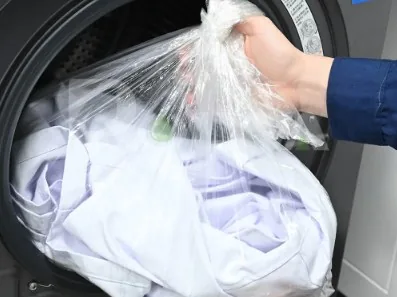
What decides how fast PVA film dissolves
The same water-soluble film can dissolve in thirty seconds in one water supply and sit for minutes in another. What actually controls PVA dissolve time - temperature, dissolved solids, film thickness, pack format and the payload itself - and how to turn that into a film specification.
Water-soluble laundry bags: matching the bag to the wash cycle
How hospital laundry bags are specified against the real wash cycle - hot-wash decontamination versus low-temperature chemical disinfection, the temperature curve rather than the set point, why wet linen is the hardest test, and how to validate bags on your own line.
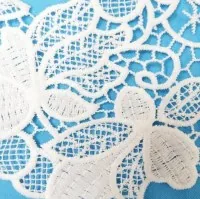
Water-soluble embroidery film: why it leaves residue
Why water-soluble embroidery film leaves residue on finished work - the grade your rinse actually needs, where film gets trapped in dense stitching, why a cold rinse fails, the compliance question on skin-contact garments, and how to prove a film on your own fabric.
PVA film that arrives soft or blocked
Why PVA film rolls arrive soft, tacky or welded into a block after transit and warehouse storage - how moisture uptake accelerates above 75% RH, what blocking actually is and how it is measured, a 20-minute arrival check, and the packaging and storage clauses to agree before you order.
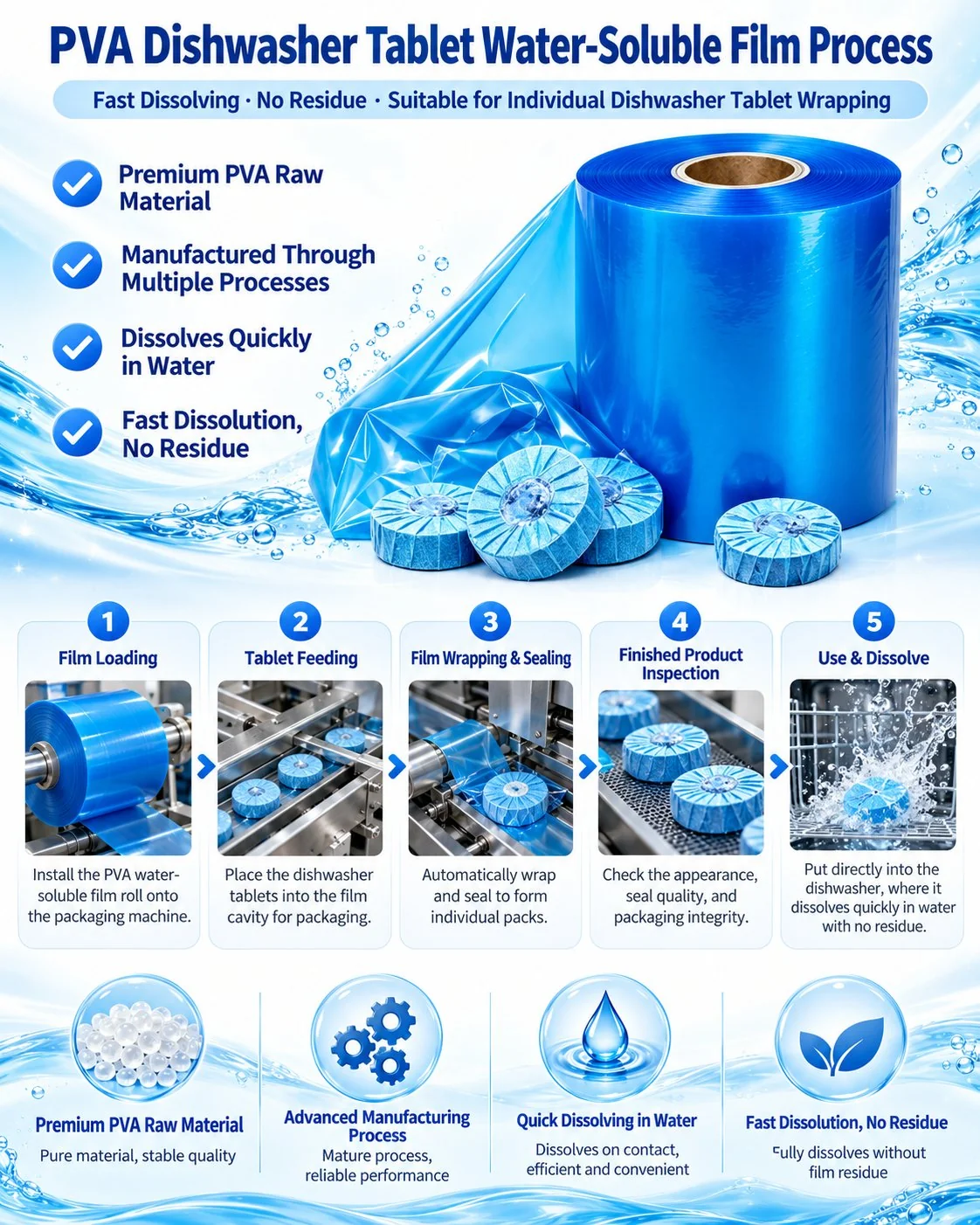
Dishwasher tablet film that clears the wash
How PVA film is chosen for dishwasher tablets - why a tablet needs a different film from a laundry pod, what thickness and pocket depth a tablet pocket takes, why rinse-aid contact and high salt loading matter more than detergent chemistry, and the checks that catch a film that will not fully dissolve.
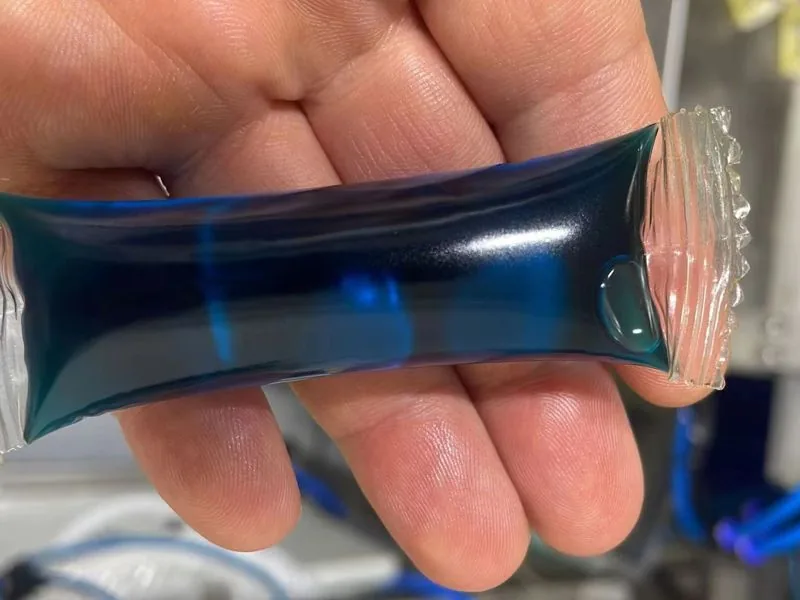
Single-dose liquid pouches in PVA film
What changes when a water-soluble pouch holds liquid instead of powder - film thickness and why a liquid head demands a heavier gauge, how fill weight and pouch geometry interact, what fill-seal machine you need and what it costs in practice, and the leak tests that catch a pouch before it ships.
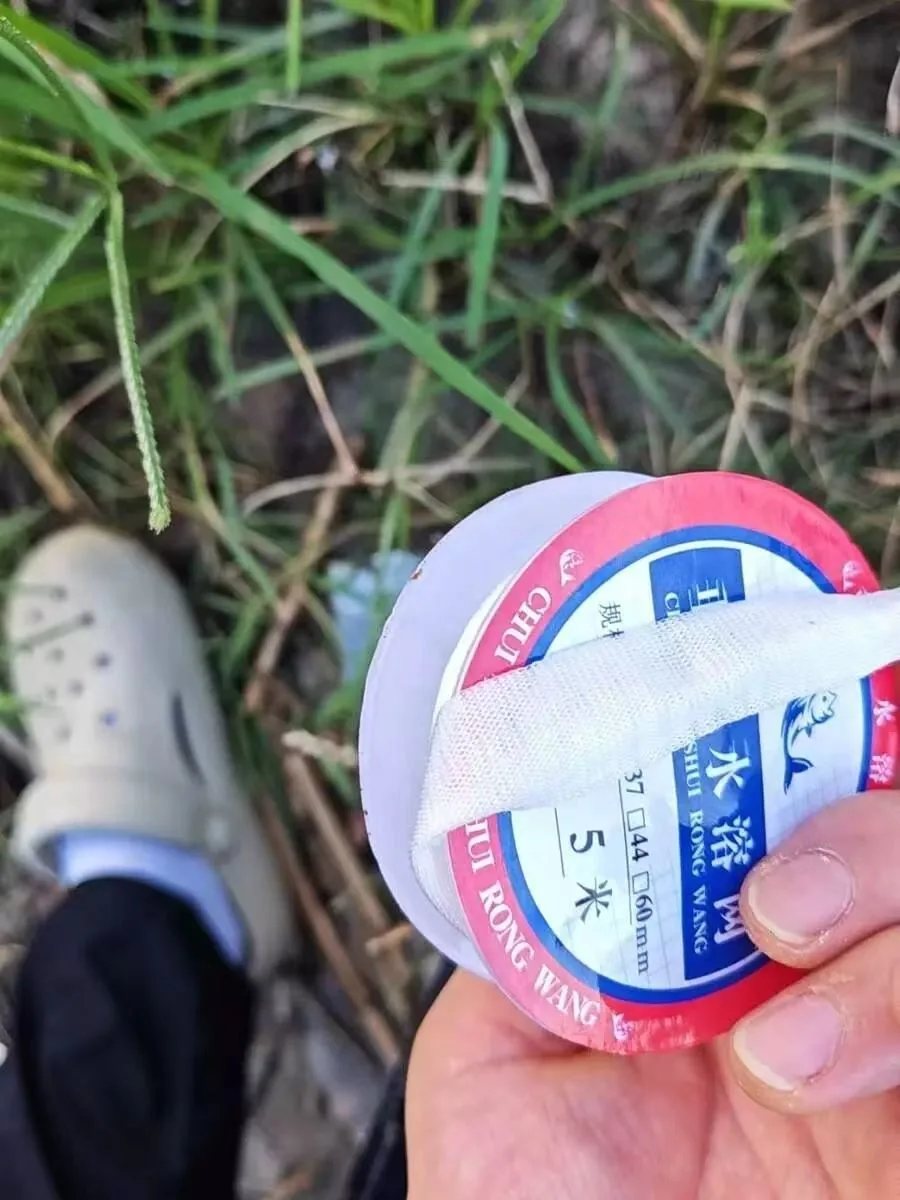
PVA mesh and stocking, specified by what it carries
How PVA mesh differs from PVA film - what mesh count does to dissolve rate and strength, how tube diameter and stocking length are matched to bait size, why cold water and deep water change the choice, and the checks that tell a mesh that holds from a mesh that clouds the swim.
Cold-water residue: how to test PVA film before you order
Film residue on a cold wash is a specification decision, not a consumer mistake. A thickness-corrected dissolution calculation from a 20 C lab result, a residue-versus-clearance target, and a six-column trial sheet you can run on your own machine before placing a volume order.
Not sure which film you need?
Tell us what you pack, your bag size and your process water temperature. We come back with a film recommendation and a sample plan.
Chat on WhatsAppor send the form — we reply within 24 hours